Series · 7 episodes · 11:40
Great books in four ideas
The classics everyone quotes and few have read, from Sun Tzu to Orwell, in the order they were written.
Play from episode 1- 1
 1:40
Sun Tzu's Art of War: count before you fight
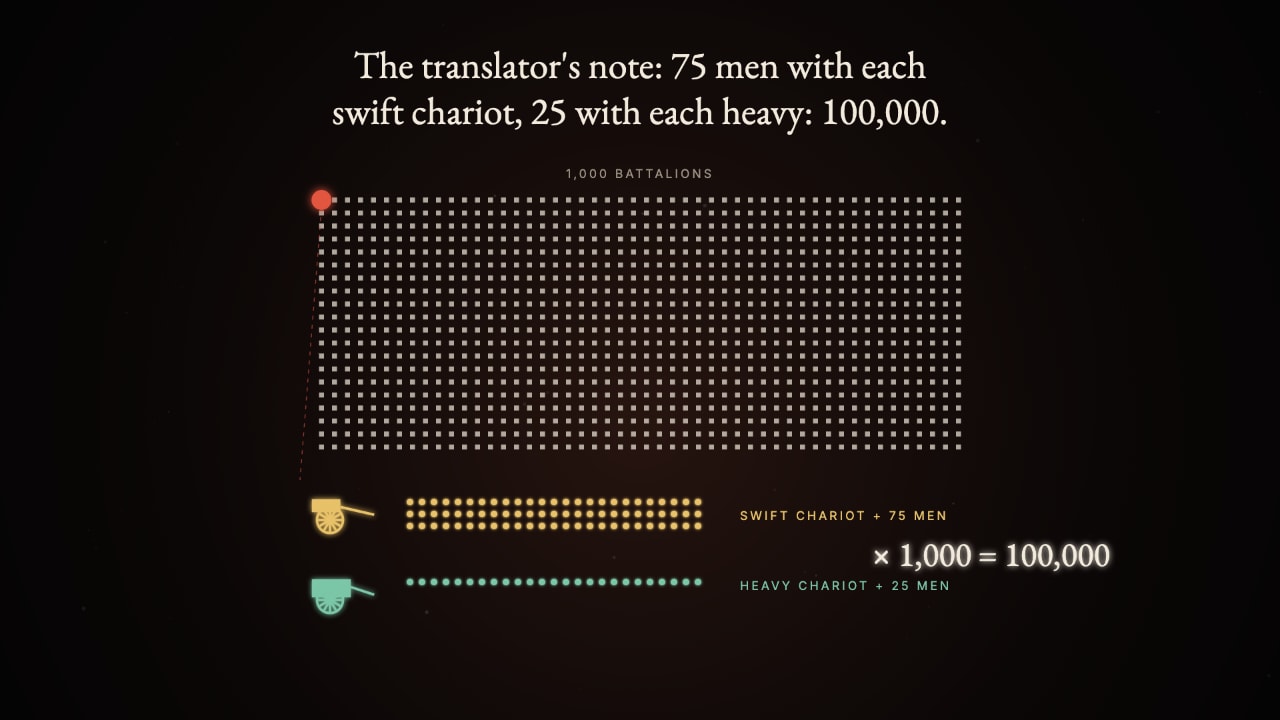
Sun Tzu's arithmetic of war: 100,000 men, 1,000 ounces of silver a day, one captured cart worth twenty of your own, and the ratio that decides each move.
- 2
 1:40
Plato's cave: why shadows fool us
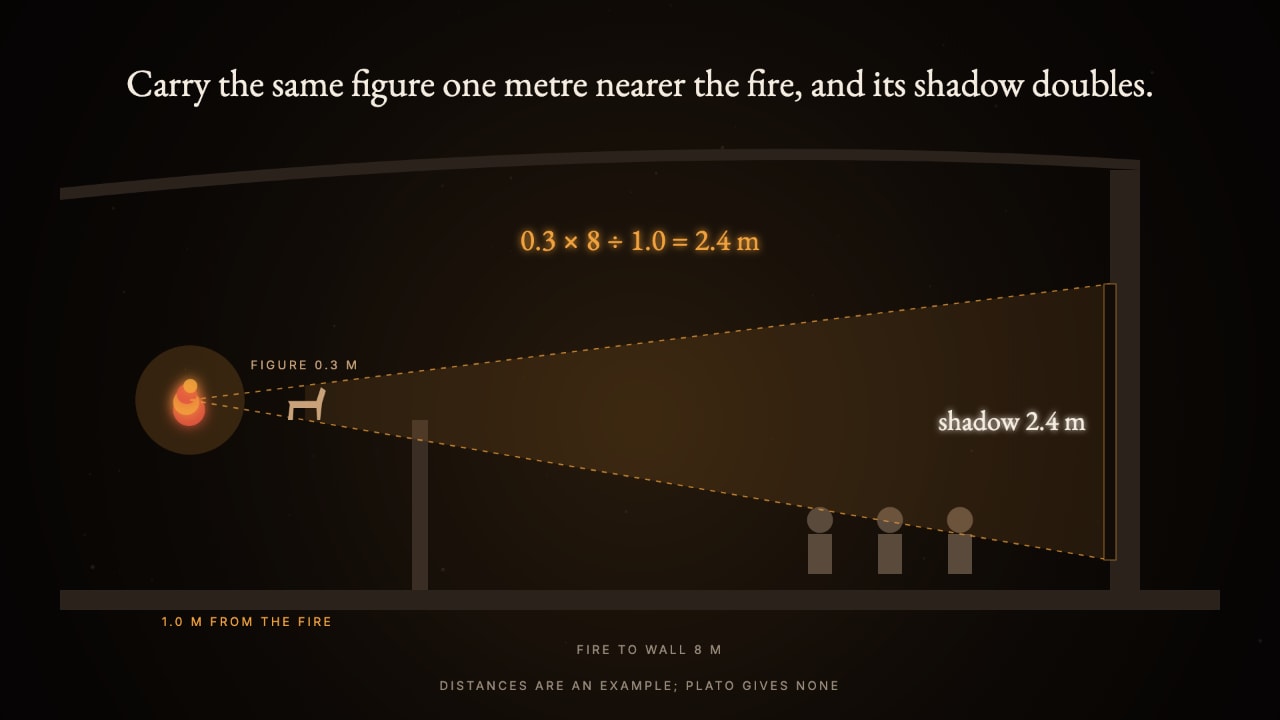
Plato's cave, with the geometry of its shadows: a figure carried nearer the fire throws a bigger shadow. Then the climb to the sun and the return to the dark.
- 3
 1:40
Marcus Aurelius' Meditations: the present is all you can lose
Marcus Aurelius lived 21,510 days, under 2% of the three thousand years he imagined. Yet he argued the longest and shortest lives lose the same: the present.
- 4
 1:40
Machiavelli's The Prince: fortune is a river
Machiavelli gave fortune half our actions and compared her to a flood: the same river that sweeps the plain passes harmlessly where banks were built in time.
- 5
 1:40
Adam Smith's invisible hand, explained
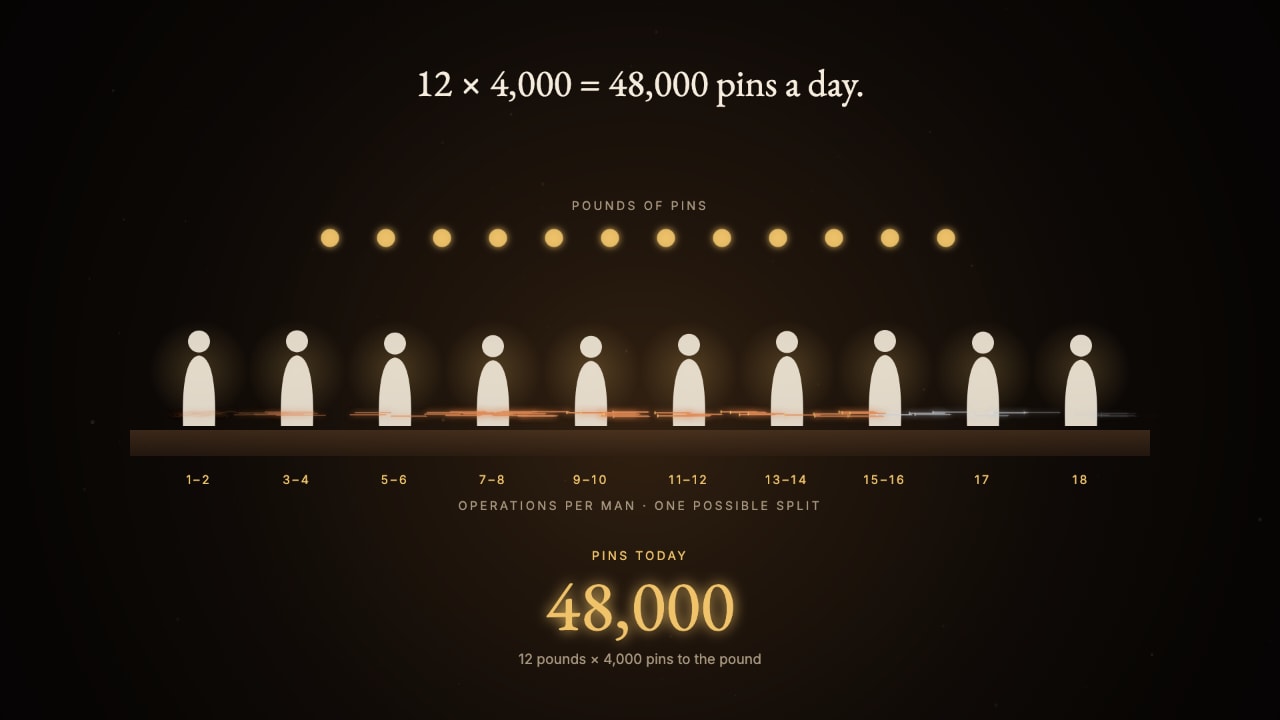
Adam Smith's pin factory, computed: ten workers sharing 18 operations made 48,000 pins a day. Then the baker's self-interest and the invisible hand.
- 6
 1:40
Thoreau's Walden: what a house really costs
Thoreau priced his Walden cabin to the half cent: $28.12½, less than a year's student rent, against $800 and years of work for an average house.
- 7
 1:40
Orwell's 1984: how a cut becomes a rise
In 1984 a chocolate ration cut from 30 g to 20 g is hailed as a rise, and boots at 43% of plan become 109% once Winston rewrites the forecast.